


|
 |
| |
Introduction
Thailand is a birdwatcher’s paradise. Not only does the country’s 500,000
square kilometers sustain at least 955 bird species (more than Europe
or North America), its highly developed infrastructure also makes it easy
to access and explore areas teeming with all sorts of wildlife. The tropical
climate, though sometimes a little on the warm side, means that any time
of year is hospitable for birdwatchers to come and commune with our feathered
friends. The nation’s terrain varies considerably from deciduous forests
in the mountainous north to tropical lowlands of swamp, scrub, jungle,
mangrove and coastline. It would be easy to spend a lifetime documenting
all the species dwelling here, though a week or so should yield enough
sightings to delight even the most discerning birdwatcher.
Not surprisingly, most species in Thailand can be found in the many lush
national parks and sanctuaries. See below for the best bird watching sites
in Thailand and some sample birding programs. Please stipulate your interest
in bird watching when you Contact Us.
|
|
Thailand’s
Top Birding Sites.
Doi Inthanon
Doi Inthanon, Thailand’s highest mountain, is a site of unique biological
interest and supports a fascinating variety of different vegetation types
and a higher bird species total than any other protected area. Of the
total of 382 species of birds so far known from Doi Inthanon, at least
266 species are residents or were formerly residents on the mountain.
Doi Inthanon is of particular conservation importance for those species
which inhabit the moist hill evergreen forests of the upper slopes. Some,
such as the Chestnut-tailed Minla and White-browned
Shortwing, which are abundant around the summit, occur in Thailand
only on those few higher mountain summits which have considerable areas
of hill evergreen forest above 1800 m. Doi Inthanon contains the only
significant protected populations of such species in Thailand. The Ashy-throated
Leaf-Warbler is found nowhere else in Thailand while an endemic
race of the Green-tailed Sunbird (Aethopyga nipalensis
angkanensis) is also completely confined to the summit. The Vachirathan
Waterfall is one of the best sites for observing birds of fast-flowing
streams. The Plumbeous Redstart and the River Chat often
perch on boulders in mid-stream. The Slaty-backed Forktail
can sometimes be seen. Among the many scarce arboreal birds to look out
for are the Red-headed Trogon, Long-tailed Broadbill, Brown-throated
Treecreeper, Green Cochoa and Purple Cochoa.
Doi Chiang Dao
Doi Chiang Dao is the largest limestone massif in Thailand and its main
peak is, at 2,220 metres, the country’s third highest mountain. It rises
dramatically at an angle of 60 degrees to face the rising sun. Its poor
porous soils, exposed rocks and limited surface water make it harsh unforgiving
habitat in which, none the less, over 50 exciting plants and insects known
only in these parts – a record for endemicity in Thailand – can be found.
Bird watching at the top of the mountain will not be so eventful because
of the rugged limestone cliff faces, lack of trees and vast open spaces.
However there are some excellent birding opportunities at lower elevations,
where you can find more open evergreen forests and pines, home to a rich
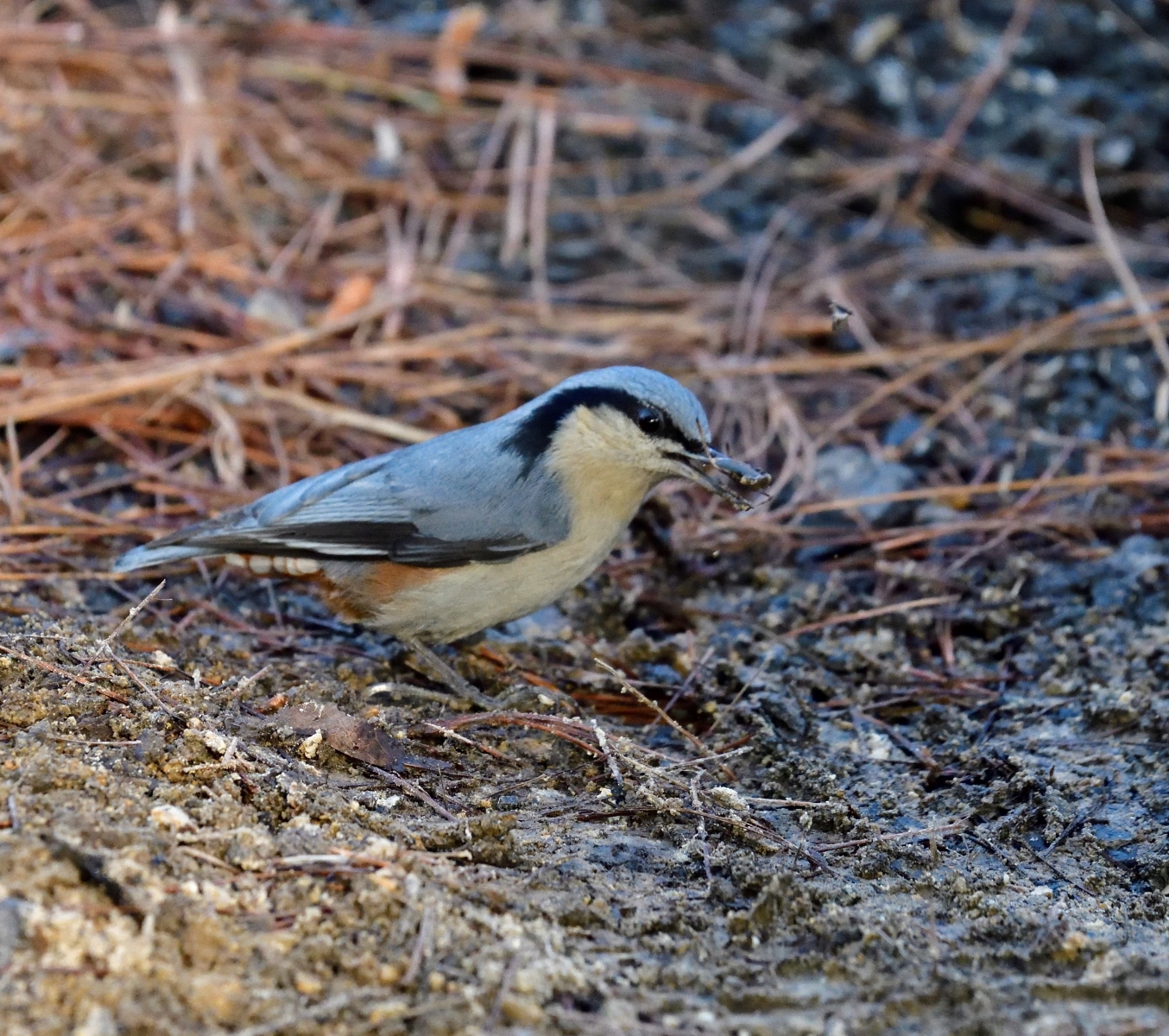
variety of montane birds. The rarest bird to be commonly
spotted here is the Giant Nuthatches (Sitta Magna). A
rosy pink face distinguishes the otherwise well camouflaged male Blossom-headed
Parakeet that is found in the deciduous forests. The
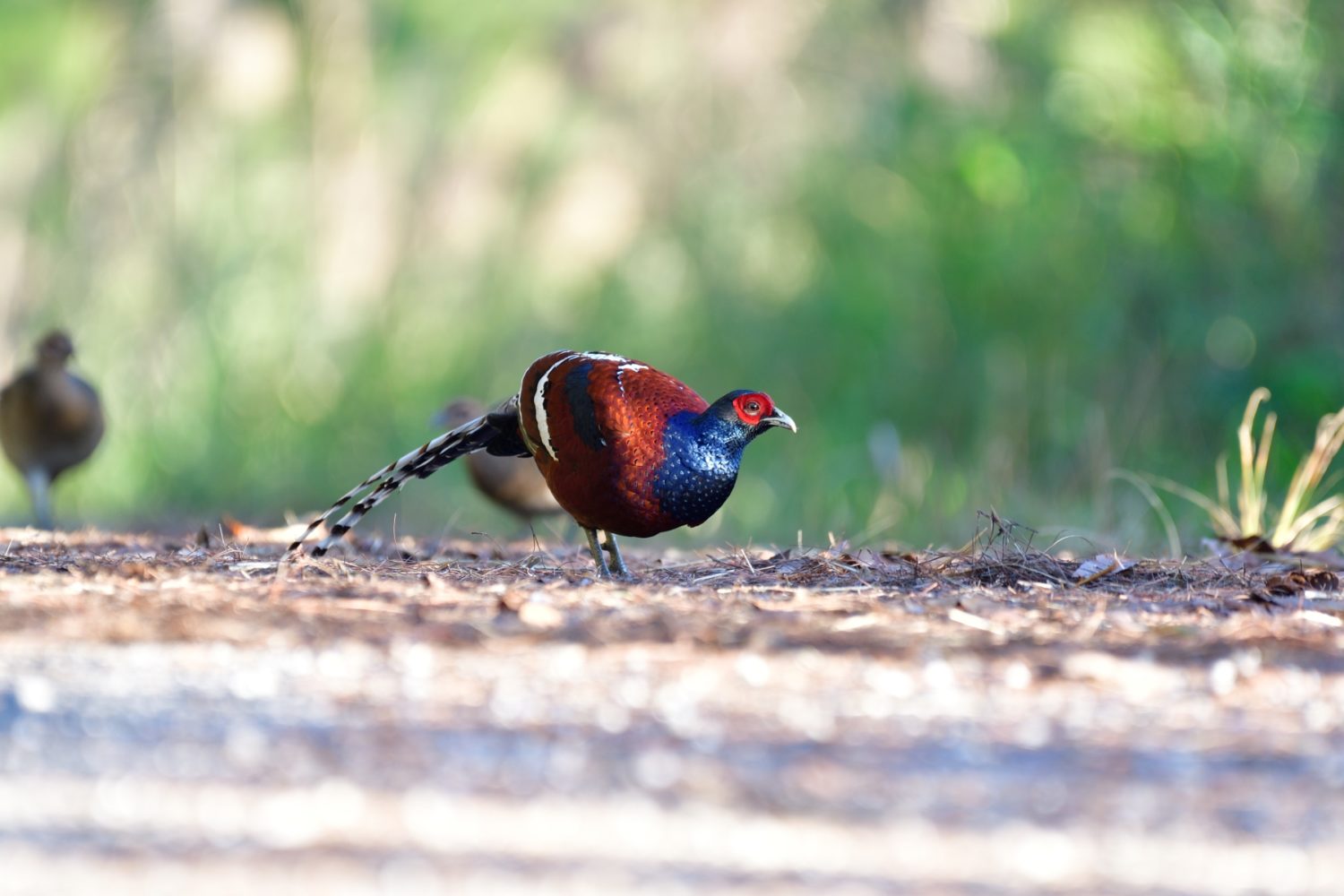
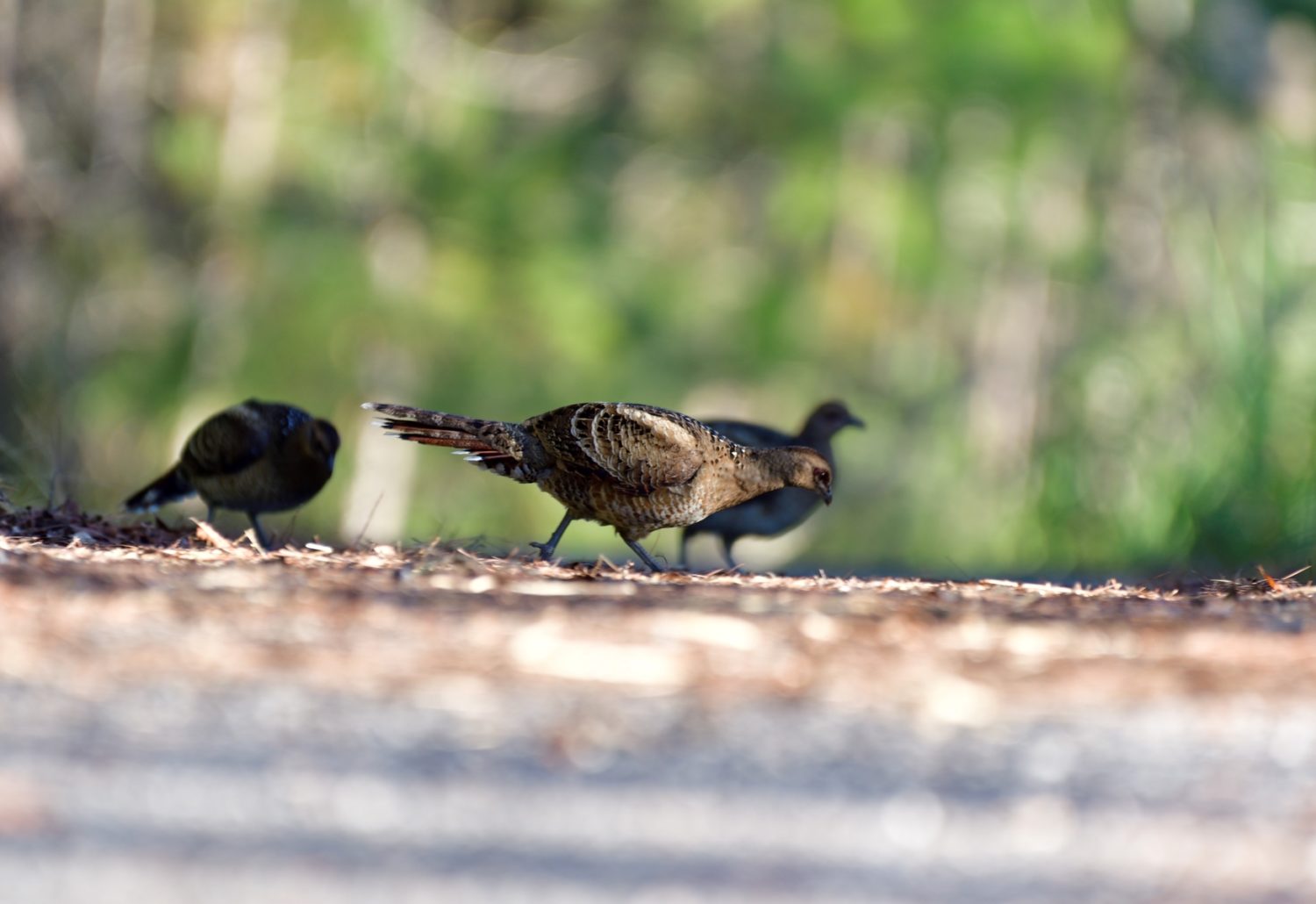
Humes Pheasant, named after the wife of a British ornithologist,
is found on very few mountains in Thailand but Doi Chiang Dao is the only
mountain where it is actually a protected species.
Doi Ankhang
Doi Ankhang is a mountain belonging to the Himilayan foot hill
range, located at the Myanmar (Burmese) border. The highest point
is 1,928 metres. Although chiefly deforested, this is still one of Northern
Thailand’s most prominent bird watching areas, due to more and more rare
bird species being in residence, as well as being a popular resting point
for numerous migratory birds. Examples of rare and beautiful birds inhabiting
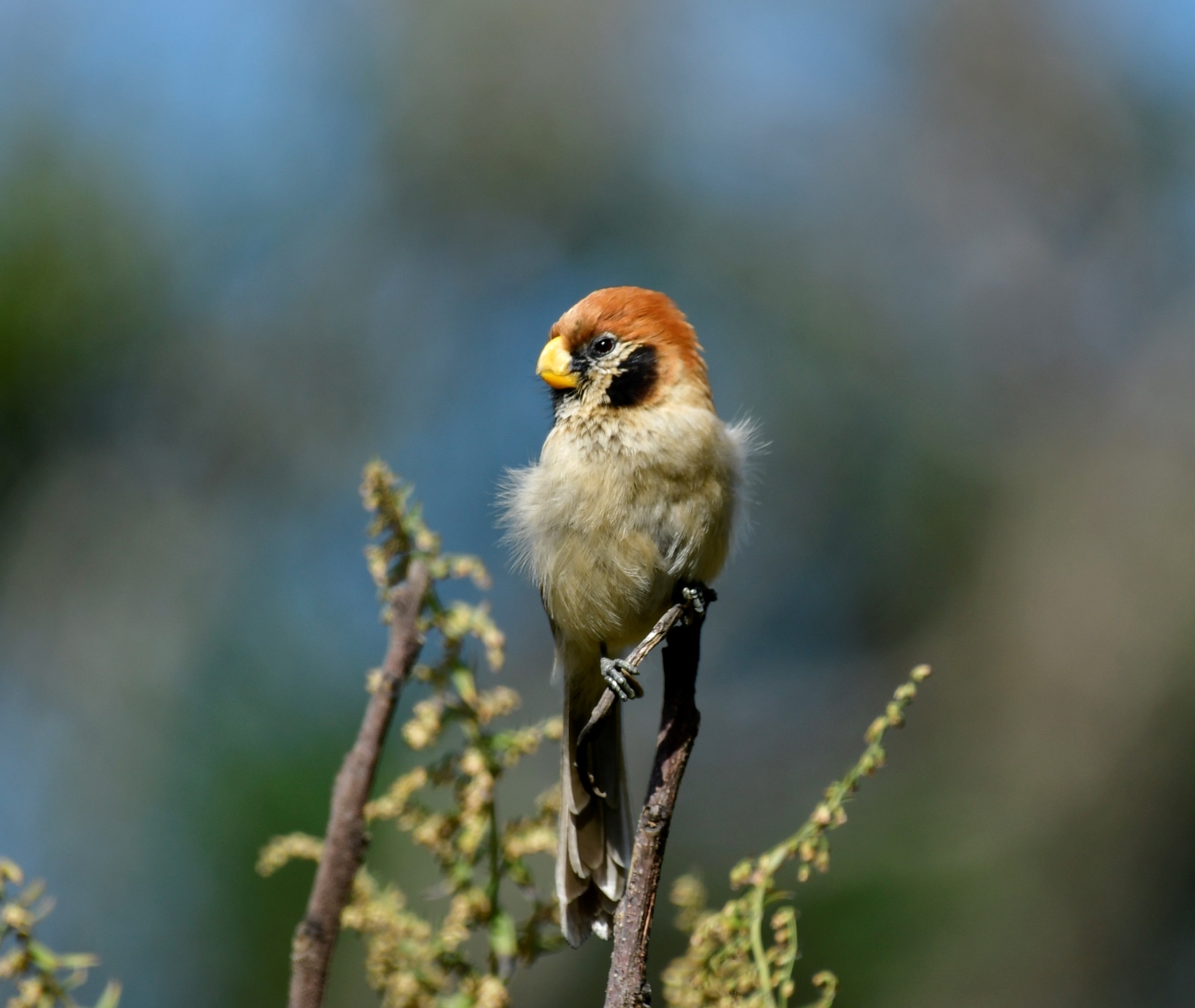
this area include the Spot-breasted Parrotbill and the
Red-faced Liocichla. A highly recommend site to find
the more rare bird species is the picturesque area named Heaven
Valley. It is not so uncommon to spot the Red-tailed
Laughing Thrush here. Around The Royal Agricultural Project Station you
can find Brown, Burmese and Long-tailed Shrike and also Fire-capped
Tits and Silver-eared Mesias.
Doi Suthep-Pui National Park
Ideal for an organized one day trip due to its convenient location, this
national park is only a 15 minute drive from the city of Chiang Mai. Doi
Suthep and Doi Pui support a remarkable flora, with over 2,000 flowering
plant species, far more than any other area of seasonal tropical forest.
The forest itself is a mix of deciduous and evergreen, with evergreen
dominating at 2,900 ft, although semi-evergreen forests fill gulleys and
waterways at lower elevations. These forests are filled all year round
with flowers and a profusion of exotic birds, butterflies and small mammals.
Examples of common finds at this park include the Bar-winged Flycatcher-shrike,
the Long-tailed and Scarlet Minivets, the Golden-fronted and Orange-bellied
Leafbirds and the Chestnut-Fronted Shrike-babbler.
Chiang Saen Lake & along the Mae Kong River Bank
Chiang Saen Lake is a tranquil paradise of wetland area and islands, set
aside for the protection of the eco-system. Whilst fishing is allowed,
though strictly controlled, motorboats are expressly forbidden, which
means it’s a haven for wading and wetland birds as well as migratory ducks.
A special effort has been undertaken recently to protect and conserve
a range of natural habitats to encourage a diverse range of birdlife to
nest in forested land around the property.
Ponds and rivers in the surrounding areas are natural habitats, or resting
stops, for Waders, Kingfishers and numerous ducks, such
as the Ruddy Shelduck and the Ferruginous Pochard.
In the forest you can spot Drongos, Indian Rollers, Babblers,
Flycatchers and Plain Prinias.
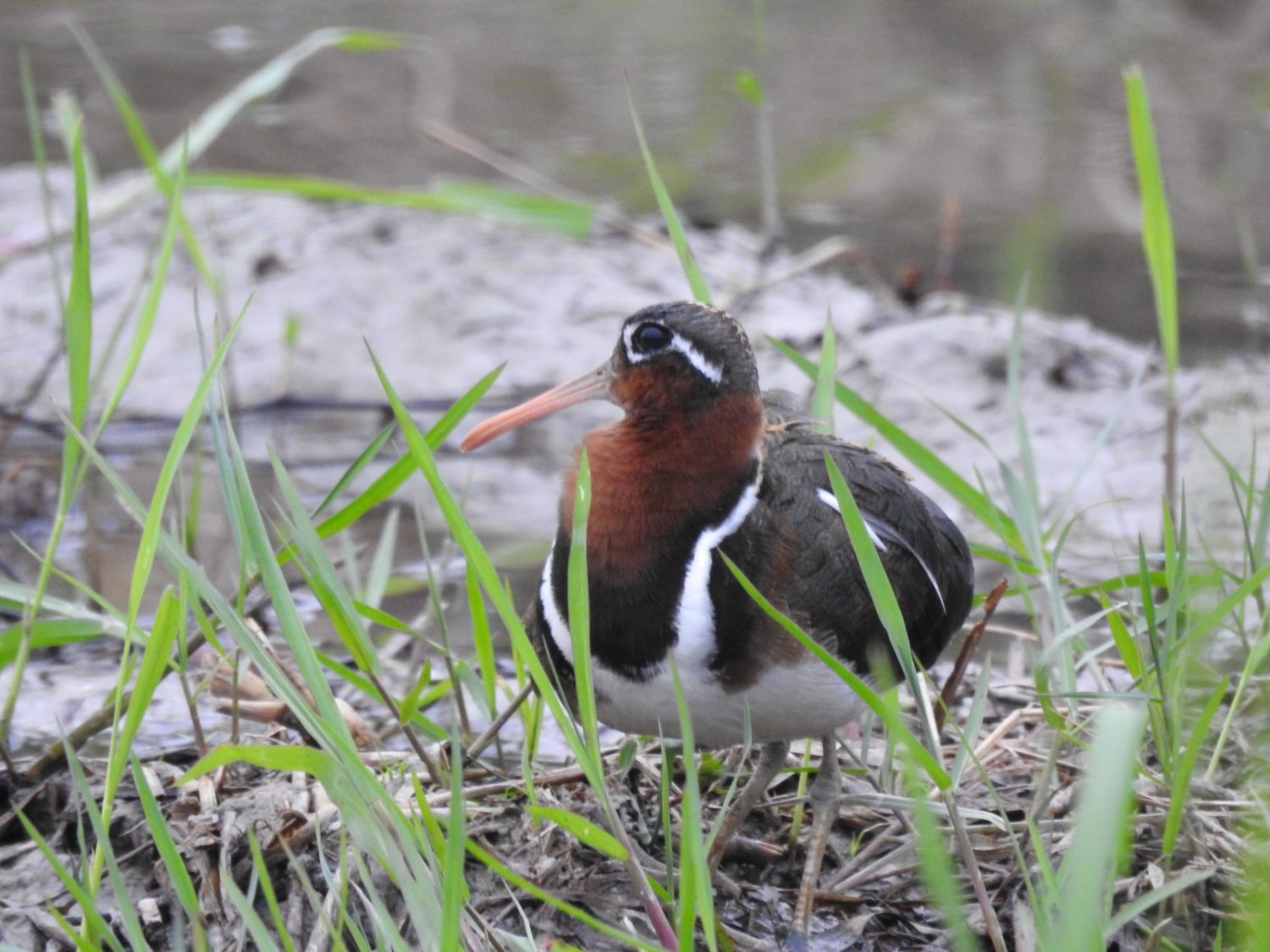
The beaches along the Maekong River are good for spotting birds such as
the Little Ringed Plover, the Small Pratincole and the
most beautiful Mandarin Ducks.
Khao Yai National Park
Khao Yai is the flagship of Thailand’s national parks. Located some 2.5
hours from Bangkok, it was the first one to be established (in 1962),
it is the most visited, and it remains one of the largest at 2,168 square
kilometers. Above all it is one of the best refuges in the country for
animals and birds in the wild, and remains the most likely spot in Thailand
to see a wild tiger or elephant. Consisting of moist
evergreen forest, mixed deciduous forest and dry evergreen forest and
over 350 species of birds, the park offers some of Thailand’s best birding
opportunities. Orchids and other epiphytic are in abundance and there
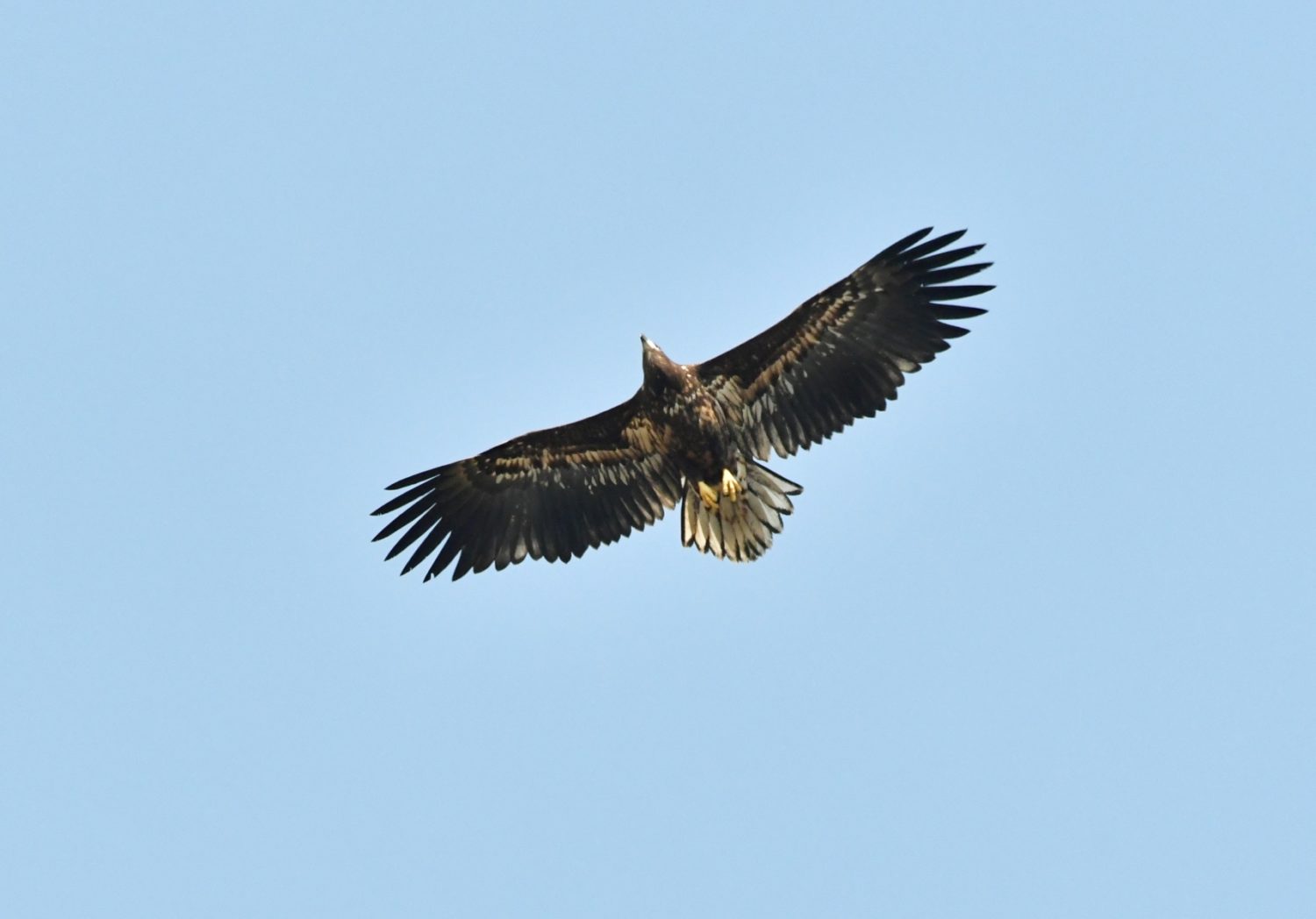
are several plants unique to the area. Birds of note include The Coral
Billed Ground Cuckoo, Asian Fairy Bluebird, Scarlet Minivet, Crested-serpent
eagle and Red-headed Trogon, to name a few! With all this, Khao
Yai is surely a bird watcher’s paradise.
Kaeng Krachan National Park
This relatively unexplored National Park is the largest and most dramatic
in Thailand. Located beside the Myanmar (Burmese) border, this park consists
of all types of forests, lakes, streams and reservoirs, making a perfect
sanctuary for birdwatchers. A variety of mammals also lurk in the depths
of the forests. Watch out for gibbons, four leaf monkeys and barking
deer. Kaeng Krachan has many birds, some northern, some southern
and some peculiarly out of place, such as the Ratchet-tailed Treepie
that hails from Indo-China. Birds which take residence at the park include
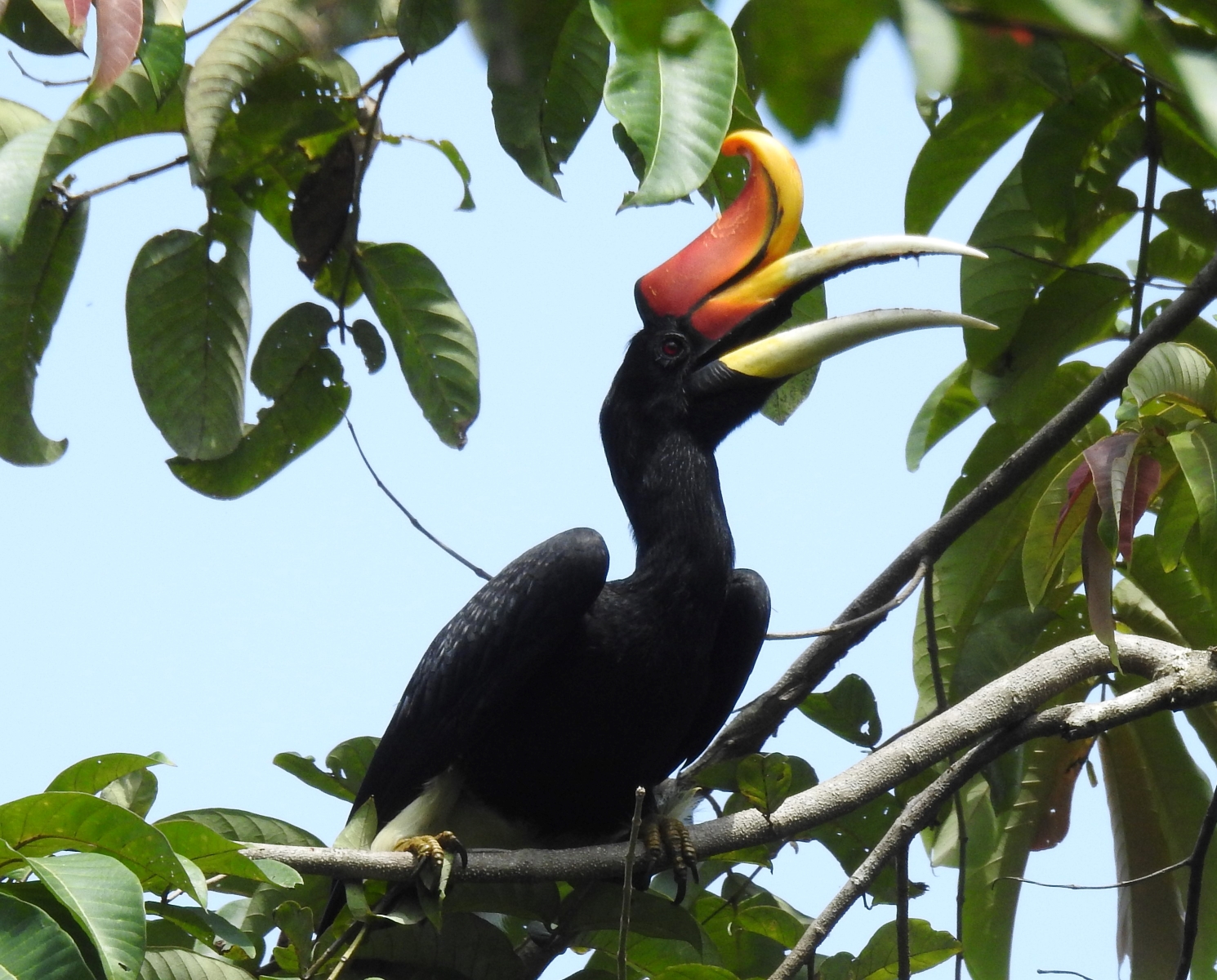
the Green Broadbill, the Wreathed and Great Hornbills
|
|
Bird Watching Sample Programs
One
day birding at Doi Inthanon
05.00am we will leave very early from the hotel to meander up the winding
roads leading to Doi Intanon. We arrive at the foothill at about 6.30am.
We will drive up to the second checkpoint during the day will proceed
up to the mountain summit to look for some of the mountains rarer birds.
Lunch will be at local restaurant in the national park. Late afternoon
we will take the trip down the mountain and back to Chiang Mai.
Remarks: We can arrange a 2days 1night trip
and 3 days 2 nights trip
|
|
Doi
Inthanon Birding Tour (BW1)
3 Days – 2 Nights
Day 1
We will leave very early from the hotel to meander up the winding roads
leading to Doi Intanon. We arrive at the foothill at
about 6.30am. We will begin our early birding along the stream and take
in the lower elevated, dry dipterocarp forest. We will enjoy a gourmet
picnic lunch and in the afternoon, carry on birding up to evergreen forest.
Overnight at one of the resort
Day 2
This morning we will take an early drive up to the second checkpoint.
Watch the birds catching their breakfast. Check the birds along the jeep
track and then enjoy a fabulous picnic lunch. In the afternoon we will
proceed up to the mountains summit to look for some of the mountains rarer
birds.
Day 3
This morning, continue birding around the mountain’s agricultural area.
After a picnic lunch, we will take the short trip down the mountain and
back to Chiang Mai.
|
|
Bird
Watching at Doi Chiang Dao(BW2) 3 Days – 2 Nights
Day 1
Leaving early from Chiang Mai, we will drive along a scenic route to Doi
Chiang Dao. Along the way, we will stop at some of the recommended
birding areas such as the irrigation canal and Pabong Cave temple.
After an enjoyable day’s bird watching, we will have an evening meal of
traditional Thai cuisine at our resort before getting an early night in
preparation for tomorrows early start.
Day 2
Early morning, we will travel by four wheel drive to Den Ya Kud
Wildlife Station. We will stop to enjoy birding at a few particularly
hot spots on the way. Tonight we will stay at the Wildlife station’s campsite.
Day 3
Today we will explore the area surrounding the Wildlife station, taking
in the beautiful natural landscapes, inhabited by a host of bird species.
In the afternoon, we will pack our belongings ready for the journey back
to Chiang Mai city.
|
|
Bird
Watching at Doi Ankhang & Doi Lang (BW3) 3
Days – 2 Nights
Day 1
Leaving early from Chiang Mai, we will drive along a scenic route to Doi
Ankhang. Along the way, we will start our birding experience around the
forest area, our base for the following day. After an enjoyable day of
bird watching, we will have a sumptuous evening meal at The Royal
Agricultural Project. All the dishes will be cooked using organic
fruits and vegetables grown on site, giving each dish a fresh and tasty
flavor. We will return to our resort to get an early night in preparation
for tomorrows early start.
Day 2
In the early morning we shall bird in the noted Heaven Valley
area. Late Afternoon, we will head to ThaTon Town. Overnight in ThaTon.
Day 3
Early morning we will drive up to Doi Lang, another best
location for birding. Late afternoon will drive back to Chiangmai.
|
|
Bird
Watching at Khao Yai National Park (BW4) 2 Days
– 1 Night
Day 1
Leaving early from Bangkok, we will take the 2 – 2.5 hour drive to Khao
Yai National Park, stopping along the way for breakfast and some birding
along the rice paddy fields. Once inside the park, we will hike to
Haew Narok Waterfall, a lovely trail, excellent for birding.
After a relaxing lunch, we will drive to Khao Keow Mountain,
where we will continue spotting birds for the remainder of the day. In
the evening we will enjoy the spotlighting trip, looking out for numerous
mammals, such as deer, civets, Siamese porcupines, We
will spend the night at Juladit Khao Yai Resort.
Day 2
After checking out of the resort, we will begin our journey to the National
Park Headquarters En route, we will stop at some renowned birding
sites, such as Nong Pak Chee. After lunch, we will continue
meandering along the scenic roads to Pha Gluay Mai Waterfall,
where you will find a profusion of exotic bird species. When you are ready,
we will begin our journey back to Bangkok.
|
|
Kaeng
Krachan Birding Trip (BW5) 2 Days – 1 Night
Day 1
Departing from Bangkok at 06.00, we will embark on the 2 - 3 hour drive
to Kaeng Krachan National Park. En-route we will stop
to enjoy a traditional Thai breakfast. On arrival, we will prepare ourselves
for the short hike to our first birding spot, Ban Krang.
This spot marks the beginning of our birding trail as we trek through
the evergreen forest to discover an abundance of exotic, beautiful birds.
A delicious picnic lunch will be enjoyed when you take a rest. After an
excellent days birding, you can relax at your resort.
Day 2
An early start sees us driving 15 km up a hill to partake in a discovery
in the dense jungle, where we will hike through some of Thailand’s best
birding territory. After spending the majority of the day bird watching,
we will prepare to leave the park for the return journey to Bangkok.
|
|
|
|
| |
|
|
|
 |
|